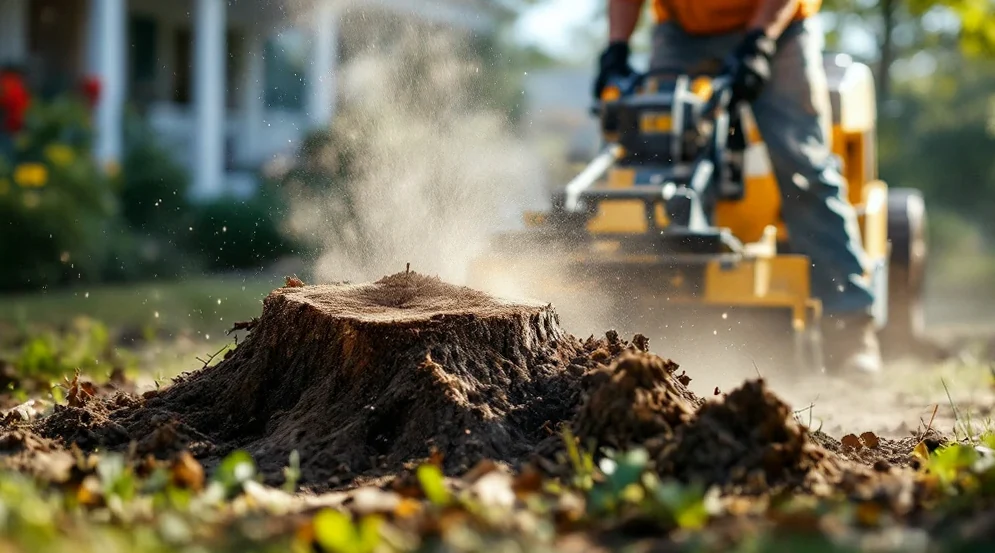
What is Stump Grinding and how does it work?
Stump grinding is the process of using a heavy, spinning wheel with carbide teeth to chew a stump down to below ground level. It's the fastest way to get rid of an eyesore and reclaim your yard for planting, mowing, or just walking without tripping.
When we show up, we bring a machine that looks like a small walk-behind lawnmower on steroids. The wheel spins at high speed and grinds the wood into fine chips, usually down to 6 to 12 inches below the soil surface. That depth matters: it's enough to let you roll sod right over the spot, or plant grass seed, without a lump showing up later.
The grinding itself is dusty and loud, but it's over in a matter of minutes for most residential stumps. The bulk of the time goes into getting the machine to the stump, clearing the area, and cleaning up the debris. If the stump is in a tight spot, like between a fence and a house, we might need to bring in a smaller machine or work at an angle, which takes a bit longer.
One thing homeowners often mix up: stump grinding is not the same as stump removal. Grinding leaves the roots in the ground, which is fine for most yards because they'll eventually rot. Removal means digging out the entire root ball, which is a much bigger job and usually not worth the cost unless you're building a foundation or planting a large tree in that exact spot.
- Grinds the stump below grade, so the hole is gone and the area is level.
- Roots stay in the ground and decay over time, which is usually harmless.
- Work is quick, but access and cleanup affect how long it takes.
- You'll be left with a pile of wood chips and sawdust, which we can haul off or spread.
Short version
- Grinding is fast, but it's not instant: prep and cleanup add time.
- Depth below grade is key, so the spot doesn't sink or heave later.
- Roots left behind are fine for most yards; they rot on their own.
- Cost depends on size and access, not just the stump itself.
How Stump Grinding works, start to finish
We start by inspecting the stump and the area around it, then we clear any rocks, debris, or obstacles that could damage the grinder. We position the machine, grind the stump down to below grade, and finish by cleaning up the chips and sawdust so your yard looks better than when we started.
The first thing our crew does is walk the yard and look at the stump's size, the slope of the ground, and what's nearby. A stump next to a driveway or a sidewalk might have concrete hidden under the soil, and hitting that with a grinder is a bad day for everyone. We also check for buried utilities, irrigation lines, or invisible fence wire. That's why we ask you to mark any sprinkler heads or dog fence before we arrive.
Once we've got the all-clear, we clear the area around the stump. We pull away loose rocks, sticks, and anything else that could get sucked into the grinder. Then we position the machine. Most stumps are ground from the top down, but if the stump is large or the ground is uneven, we might start from the side and work inward. The wheel is lowered onto the stump and we move it back and forth, taking off a few inches at a time. It's a controlled process, not a one-pass deal.
For a typical residential stump, say 12 to 18 inches across, the grinding takes 15 to 30 minutes. Larger stumps, or ones with big root flares, can take an hour or more. After we hit the target depth, we backfill the hole with the chips and sawdust we just made. That leaves a soft, level spot that settles as the wood rots. If you're planning to plant grass right away, we can rake it smooth and you can seed over it.
Cleanup is the part that separates us from the cheaper outfits. Some crews grind the stump and leave the chips in a pile for you to deal with. We haul the bulk of the chips to a trailer or spread them around the yard if you want them for mulch. We also rake the area and blow off any dust from your driveway or walkway. That's the difference between a job that looks finished and one that looks like a tornado hit.
If you're wondering about the cost, most residential stumps run between $100 and $350, depending on the diameter and how easy it is to get the machine to the stump. (dixielandtree.com) Small stumps start around $100, medium ones at $200, and large ones at $350. (dixielandtree.com) Some companies charge a flat rate per inch, which can be $25 to $50 per inch. (dixielandtree.com) The only way to get an exact number is to have us come out and look, which we do for free.
- Inspect and mark.We check the stump size, ground conditions, and any hidden hazards. You mark sprinklers and utility lines.
- Clear the area.We remove rocks, sticks, and debris so nothing damages the grinder or gets thrown.
- Grind it down.The machine chews the stump to below grade, usually 6 to 12 inches deep, in controlled passes.
- Backfill and clean.We fill the hole with chips, rake it level, and haul off the excess so your yard is ready to use.
Why Stump Grinding matters for your home
A stump isn't just ugly. It's a trip hazard, a home for pests, and a constant obstacle for your mower. Grinding it down makes your yard safer, easier to maintain, and more usable, and it can even help with drainage and future planting.
Let's start with the obvious: a stump is a tripping hazard. Kids run, adults carry groceries, and nobody looks down every step. A stump that's even an inch above the grass can catch a toe and send someone sprawling. That's a liability you don't need, especially if you have kids or older folks visiting.
Then there's the pest factor. A rotting stump is a five-star hotel for termites, carpenter ants, and other wood-boring insects. Those bugs don't stay in the stump; they'll wander into your house if it's close enough. Grinding the stump removes the food source and the shelter, which cuts down on the odds of an infestation.
Your mower will thank you too. Mowing around a stump means dodging, trimming by hand, and risking a bent blade or a thrown rock. Once the stump is gone, you can mow straight over the spot. It's one less chore and one less thing to cuss at on a Saturday morning.
In Huntsville, where we get plenty of rain, a stump can also mess with drainage. Water pools around the base, which keeps the wood wet and speeds up rot, but it also creates a muddy spot that's a mess for weeks. Grinding it down and backfilling with chips lets water soak in evenly, so you don't get a swampy patch in the middle of your yard.
And if you're thinking about planting something new, a ground-out stump is the best starting point. The chips and sawdust break down and add organic matter to the soil. You can plant a new tree or a flower bed right in that spot, and the roots of the old tree won't compete with your new plants.
One thing we hear a lot: "Can't I just let it rot?" Sure, but a hardwood stump like oak or hickory can take 10 to 20 years to break down, and it'll be a hazard and an eyesore the whole time. Grinding it out now costs a couple hundred bucks and gives you your yard back this weekend.
Costs vary, but here's a realistic picture: small stumps run about $100, medium ones between $150 and $300, and large ones at $350 or more. (ogletreeservice.com) (dixielandtree.com) Those are typical ranges, and the exact quote depends on access and diameter. We'll give you a firm number before we start, so there are no surprises.
If you're selling your home, a stump in the front yard is a red flag to buyers. It says the previous owner didn't take care of the place. Grinding it out is a cheap way to improve curb appeal and avoid a lowball offer.
Stump close to the house
If the stump is within 10 feet of your foundation, grind it ASAP. It's a direct path for termites and ants to find your siding.
Stump in a high-traffic area
If it's in the middle of the yard or near a walkway, grind it before someone trips. It's a matter of safety, not just looks.
Stump in a back corner
If it's out of the way and not causing problems, you can wait. But it'll still rot and attract pests, so plan to grind it eventually.
Common problems and what causes them
Most stump grinding problems come down to three things: hidden obstacles, poor cleanup, and underestimating the size or access. We've seen all of them, and we know how to avoid them.
Hidden obstacles are the biggest surprise. We've hit buried concrete, old fence posts, and even a cast-iron pipe under a stump. That's why we inspect first and ask you to mark anything you know about. If we hit something unexpected, we stop and figure out the best way to proceed, which might mean moving the grinder or adjusting the depth. It's a lot easier to avoid a problem than to fix one.
Another common issue is stumps that are bigger than they look. A stump that's 2 feet across at the top might have root flares that spread 4 feet wide. That means more grinding time and more chips. We quote based on what we see, but if the stump is partially buried or has grown over with grass, we might need to adjust. That's why we always do a free on-site estimate, so the price we give you is the price you pay.
Poor cleanup is a complaint we hear from homeowners who've used other companies. Some crews grind the stump and leave a pile of chips that you have to deal with. We don't do that. We haul off the excess or spread it where you want it, and we rake the area smooth. A good cleanup is part of the job, not an extra.
Access is a big deal in Huntsville, where many homes have narrow driveways or steep backyards. If we can't get the machine to the stump, we have to use a smaller grinder or work by hand, which takes longer and costs more. That's why we ask about access when you call. If the stump is behind a fence, we might need you to open the gate. If it's on a slope, we might need to anchor the machine. These are things we can plan for, but only if we know about them.
Finally, there's the issue of depth. Some homeowners want the stump ground flush with the ground, which is fine for most uses. But if you're planning to pave or build over the spot, you'll want it deeper, maybe 12 inches or more. We can do that, but it takes more time and costs a bit more. We'll talk through your plans before we start, so you get the depth you need.
If you've got a stump that's been there for years, the wood might be soft and punky, which grinds faster. If it's a fresh cut, the wood is solid and takes longer. Either way, we've got the right machine for the job.
One more thing: don't try to burn a stump. It's dangerous, it's often illegal in city limits, and it can smolder for days underground. Grinding is safer and faster, and you don't have to worry about a fire spreading.
Worth it when
- A stump in a high-traffic area or near the house.
- You want to plant grass or a garden in that spot.
- You're selling your home and want to improve curb appeal.
- Stumps attract pests or cause drainage issues.
Hold off when
- Located in a remote area, the stump causes no problems.
- You're planning major landscaping that might move the stump.
- A protected species may call the stump home (rare, but check).
- You're on a tight budget and the stump isn't an immediate issue.
Sources
Need stump grinding in Huntsville? Get a free estimate today.
📞 256-946-4625