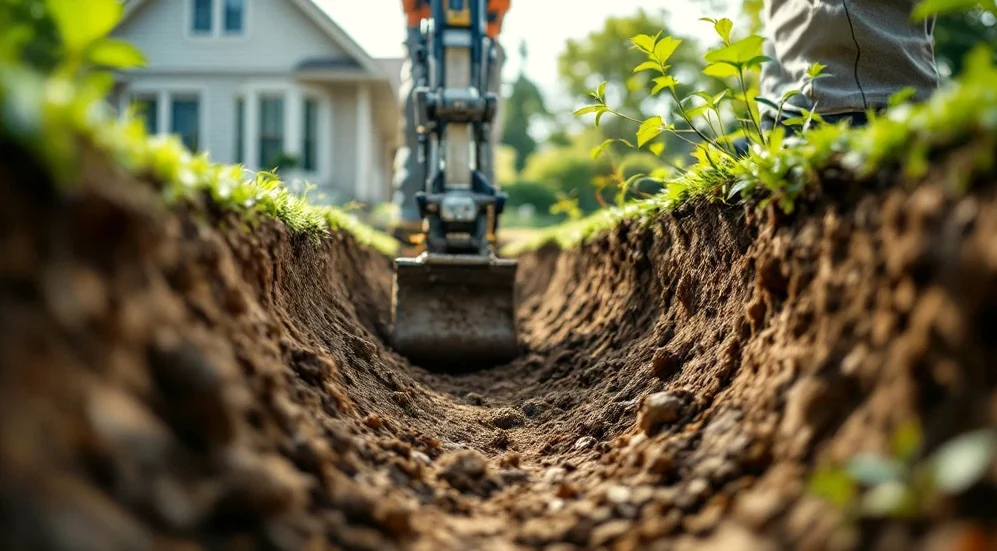
What is Root System Excavation and how does it work?
Root system excavation is the process of digging out and removing the entire root network of a tree, not just the stump. It clears the ground for new construction, landscaping, or to eliminate regrowth and soil settling.
Most people think cutting a stump down to ground level is the end of it. But the roots underneath keep working. They can sprout new shoots, decay into voids that cause the ground to sink, or leave a hidden mass that blocks a foundation or utility line. Root system excavation takes the whole thing out, roots and all.
The work starts with a grinder to chew the visible stump down, then a mini excavator or backhoe digs out the root ball and the major lateral roots that spread out from the trunk. On a mature oak or pine in Huntsville, that root system can extend 20 to 30 feet from the base, though most of the heavy mass sits in the first 8 to 10 feet. We pull the wood out, backfill the hole with the soil we dug, and grade it level.
This is heavier work than stump grinding. Grinding leaves the roots in the ground and turns the top into mulch. Excavation removes the root mass entirely, which is why it costs more and takes longer. But for a homeowner who wants to pour a patio, plant a garden, or stop the ground from sinking, it's the only way to get it done right.
We're talking about a dig. The equipment is bigger, the hole is deeper, and the cleanup is more involved. That's why the price range for residential excavation in Huntsville runs from $1,500 to $6,300 for most projects. (angi.com) The exact number depends on how many roots there are, how deep they go, and what we have to work around.
If you're only worried about a stump that's in the way, grinding might be enough. But if you're planning to build, plant, or regrade the area, excavation is the move. It's the difference between a quick fix and a permanent solution.
- Removes the entire root system, not just the visible stump
- Prevents regrowth from leftover roots
- Eliminates voids that cause soil to settle and sink
- Clears the area for construction, planting, or leveling
- Costs $1,500 to $6,300 for most residential projects in Huntsville
Short version
- Grinding handles the stump above ground; excavation removes the roots below.
- Excavation is the right call when you plan to build, plant, or level.
- Typical Huntsville projects run $1,500 to $6,300. (angi.com)
- Free estimates from our crew tell you exactly what your yard needs.
How Root System Excavation works, start to finish
Root system excavation starts with stump grinding to clear the top, then a mini excavator digs out the root ball and lateral roots. The hole is backfilled and graded, leaving a clean, level surface.
The first step is always a site walk. We look at the tree's size, the species, and what's around it. A pine in an open yard is a different job than a maple squeezed between the house and the driveway. Root systems vary depending on tree species, so we adjust the plan. (hsvutil.org) Some trees send roots deep; others spread wide and shallow.
Once we know what we're dealing with, we bring in a stump grinder to chew the visible stump down to about 6 to 8 inches below grade. That clears the way for the excavator to get at the root ball without tearing up the lawn more than necessary. Grinding first also breaks up the top of the root mass, making the digging faster.
Next comes the excavator. A mini excavator with a 12- or 18-inch bucket is usually enough for residential work. We dig around the root ball, following the major lateral roots out as far as they go. On a large tree, that can mean excavating a trench 10 feet long on each side. We pull out the woody material, separate it from the soil, and pile it for hauling.
The hole gets backfilled with the soil we removed. We don't bring in fill unless the root system was so big that we took out more dirt than we can put back. Then we grade the surface level, breaking up clumps and filling low spots. The area is ready for sod, seed, or whatever you have planned.
Cleanup is part of the job. We rake the area, pick up the wood chunks, and haul them off. Some outfits blow the leaves out and call it done; we leave the yard looking like we were never there, except for the new flat spot where a tree used to be.
The whole process, for a typical residential tree, takes one to two days. A big oak with a wide root system can stretch to three. We work around your schedule, and we protect the rest of your yard as much as we can. That means laying down plywood or track mats to keep the excavator from tearing up the grass.
- Site walk.We measure the tree, check the species, and look for utilities and obstacles. This tells us how deep and wide the dig needs to be.
- Grind the stump.A stump grinder chews the visible wood down below grade, clearing the way for the excavator and breaking up the top of the root mass.
- Dig out the roots.A mini excavator pulls the root ball and lateral roots, following them outward until the ground is clear of woody material.
- Backfill and grade.We put the soil back, break up clumps, and level the area. The result is a clean, flat surface ready for whatever comes next.
- Cleanup.We haul off the wood chunks, rake the site, and leave the yard tidy. No leftover piles, no hidden surprises.
Why Root System Excavation matters for your home
Root system excavation matters because leftover roots can regrow, decay into voids that cause settling, or interfere with foundations and utilities. Removing them protects your property and gives you a clean slate for new projects.
The ground under your yard is not static. When a tree is cut down and the stump is ground, the roots underground slowly rot. As they decay, they leave empty spaces. Rain and gravity push the soil down into those voids, and the surface sinks. A year later, you've got a depression in the middle of your lawn that collects water and looks terrible.
That settling is more than cosmetic. If the tree was near your house, the sinkhole can pull the soil away from the foundation. In Huntsville's clay-heavy soil, that can mean cracks in the slab or shifting in the footings. Excavation removes the root mass before it has a chance to decompose, so the ground stays put.
Then there's regrowth. Some species, like sweetgum and certain maples, will sprout new shoots from any piece of root left in the ground. You cut one, and three come back. That's a constant battle for years. Excavation takes out the whole root system, so there's nothing left to sprout.
If you're planning any kind of construction, excavation is non-negotiable. A concrete patio, a retaining wall, a new driveway, they all need a stable base. Pouring concrete over a decaying root mass is asking for cracks. Digging out the roots first means your new structure sits on solid ground.
Utilities are another reason. Huntsville Utilities runs a tree trimming program for line clearance, but that's for branches, not roots. (hsvutil.org) If a root is growing near a water line or sewer pipe, excavation can get it out before it becomes a problem. We're careful to locate utilities before we dig, and we work around them when we can.
The cost of excavation, $1,500 to $6,300 for most residential projects in Huntsville, might seem like a lot. (angi.com) But compare that to the price of fixing a settling foundation or replacing a cracked sewer line. Excavation is cheap insurance against problems that cost ten times more later.
For homeowners who want to plant a garden or a new tree, excavation gives you clean, root-free soil. You don't have to fight old roots when you're digging new holes. The ground is ready for whatever you want to put in it.
Stump is ground, area looks fine
If you notice the ground starting to sink or water pooling where the stump was, that's a sign of root decay. It can wait a season, but it won't fix itself.
Planning a patio or garden
Before you pour concrete or plant, get the roots out. Doing it after the project is built means tearing up new work.
Sinkhole near the foundation
If the ground is visibly sinking next to your house, that's an urgent issue. Excavation removes the cause before the foundation shifts.
Common problems and what causes them
Common problems include regrowth from leftover roots, soil settling, and damage to foundations or utilities. These happen when only the stump is ground and the root system is left to decay or sprout.
The most common problem we see is regrowth. A homeowner grinds a stump, thinks it's done, and a few months later there are shoots coming up all over the yard. That's because grinding only takes the top few inches. The roots are still alive, and many species will push up new growth. Excavation removes those roots entirely, so there's nothing to sprout.
Soil settling is the second big one. As roots decay underground, they leave voids. The soil above them collapses into the gaps, and you get a dip in the lawn. In heavy rain, that dip fills with water, which accelerates the decay and makes the problem worse. Excavation takes the roots out before they rot, so the ground stays level.
Foundation damage is the serious one. If a tree was close to the house, the roots can wick moisture out of the soil, causing it to shrink and pull away from the foundation. Or, as the roots decay, the soil shifts and the foundation moves. Either way, you're looking at cracks and structural issues that cost thousands to repair. Excavation removes the root mass and lets the soil settle naturally, without the tree's influence.
Utility lines are a hidden risk. Roots from a large tree can grow into sewer lines or water pipes, causing blockages or leaks. If that's happening, excavation can get the roots out and give you a chance to repair the line. Huntsville Utilities handles tree trimming for overhead lines, but underground roots are your responsibility. (hsvutil.org)
Another issue is poor drainage. After a stump is ground, the area often becomes a low spot where water collects. That's not just ugly; it can lead to mosquito breeding and water damage to nearby structures. Excavation and regrading fix the drainage by giving the water a path to flow away.
Finally, there's the issue of leftover wood. Some contractors grind the stump and leave the wood chips in the hole. As they decompose, they rob the soil of nitrogen, which can kill grass or plants you put in later. Excavation removes the wood entirely, so your soil stays healthy.
The fix for all of these is the same: get the roots out. It's more work upfront, but it saves you from a string of problems down the road. And with excavation costs in Alabama ranging from $1,500 to $15,000 for typical residential projects, depending on scope, you want to do it right the first time. (landstreamit.com)
Worth it when
- You're building a patio, deck, or driveway over the old tree spot
- You're planting a garden or new tree and want root-free soil
- Ground is already settling or water pools after rain
- You've seen regrowth from a previous stump grind
Hold off when
- If the stump is in a remote corner and you don't care about the ground
- You're on a tight budget and grinding will do for now
- A small tree with a minimal root system
- You're planning to sell and just want the stump gone
Frequently Asked Questions
How much does root system excavation cost in Huntsville?
Most residential excavation projects in Huntsville run between $1,500 and $6,300. (angi.com) The final price depends on the tree's size, the root spread, soil conditions, and how much cleanup you need. We give free estimates on site, so you'll know the exact number before we start.
What's the difference between stump grinding and root system excavation?
Stump grinding chews the visible stump down to below grade and leaves the roots in the ground. Excavation digs out the entire root system, roots and all. Grinding is quicker and cheaper, but it leaves the roots to decay, which can cause settling or regrowth. Excavation is a permanent solution.
Will the ground sink after excavation?
No, that's the point of excavation. By removing the roots before they decay, we eliminate the voids that cause settling. We backfill with the soil we dug out and compact it as we go, so the ground stays level.
Can you excavate roots near my house or driveway?
Yes, but we're careful. We locate utilities before digging and use hand tools or smaller equipment in tight spots. If a root is close to a foundation, we may leave a small portion in place to avoid structural damage, and we'll tell you if that's the case.
How long does root system excavation take?
Most residential jobs take one to two days. A large tree with a wide root system can take up to three. The timeline depends on the tree's size, the soil, and how much root mass we have to pull out.
Do I need to do anything before you arrive?
Just clear the area of any furniture, toys, or obstacles. Let us know if there are underground sprinkler lines or invisible pet fences. We'll handle the rest. We'll also mark any utility lines before we dig, which is standard practice.
What do you do with the dirt and wood after excavation?
We backfill the hole with the soil we removed, then grade it level. The wood chunks and root pieces are hauled away. If there's excess soil, we can spread it around the yard or haul it off, depending on what you prefer.
Will you damage my lawn during excavation?
We try to minimize it. We use track mats and plywood to protect the grass where the excavator needs to travel. Some turf damage is unavoidable, but we'll rake and level the area when we're done, and you can reseed or lay sod right away.
Can I plant a new tree where the old one was excavated?
Yes, that's one of the best reasons to excavate. The soil is free of old roots and organic debris, so a new tree can establish itself without competition. We'll leave the ground graded and ready for planting.
How do I get a free estimate for root system excavation?
Call us at 256-946-4625 and we'll schedule a time to come out. (huntsvillestumpgrinding.com) We'll look at the tree, measure the root spread, and give you a firm quote on the spot. No obligation, no pressure.
Sources
Need stump grinding in Huntsville? Get a free estimate today.
📞 256-946-4625