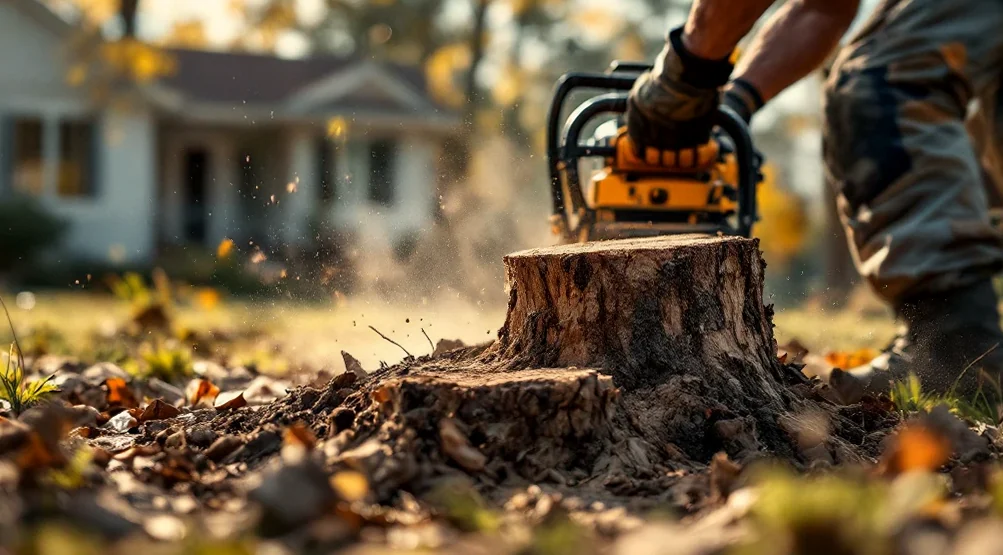
What is Emergency Storm Damage Stump Removal and how does it work?
Emergency storm damage stump removal is the fast, safe grinding of a stump left after a storm-toppled tree. We assess the site, clear debris, grind the stump below grade, and haul away the chips, often within 24 to 48 hours.
When a storm takes down a tree in Huntsville, the stump is the leftover problem. It's not just an eyesore; it's a hazard. Kids trip over it, mowers hit it, and it can become a home for termites or carpenter ants. Emergency removal means we treat your stump as a priority, getting to it quickly so you can move on.
The work itself is straightforward. We bring a stump grinder, which is a machine with a spinning cutting wheel that chews through wood. We grind the stump down to several inches below the soil line, so you can seed or sod over the spot. The process is fast, usually under an hour for a typical residential stump, and we clean up the wood chips so you don't have to.
What makes it 'emergency' is the timing. After a storm, our schedule fills up fast. Homeowners who call early get their stumps ground first. We prioritize storm work because the longer a stump sits, the more problems it can cause, like roots that start to sprout or the stump becoming a trip hazard for the family.
One thing we tell every homeowner: don't wait. The longer that stump sits, the harder the ground gets, and the more time pests have to move in. A quick call gets you on the schedule and gets that stump gone before it becomes a bigger headache.
We're based in Huntsville, so we know the local soil and the typical storm damage patterns. Clay soil holds water, which can make the area muddy and slow down grinding. We account for that, and we bring the right equipment to handle it.
- Emergency service prioritizes storm-damaged stumps, often within 24 to 48 hours.
- Grinding goes below grade, so the stump is gone, not just cut lower.
- We haul away the chips, leaving your yard ready for planting or grass.
- Fast action prevents pests, sprouting, and trip hazards from getting worse.
Short version
- Storm down a tree? The stump is the leftover hazard.
- Emergency grinding gets it gone fast, often within two days.
- We grind below grade and haul the chips, so you can replant.
- Call early after a storm; our schedule fills quickly.
How Emergency Storm Damage Stump Removal works, start to finish
We start with a quick site assessment, clear any debris around the stump, then grind it below grade with a heavy-duty stump grinder. Finally, we rake up the chips and leave the area clean, usually within an hour or two.
The first step is a phone call. You tell us what happened, where the stump is, and how big it is. We ask about access, like whether the stump is in the backyard with a narrow gate or right next to the driveway. That helps us tell you what to expect and when we can get there.
When we arrive, we walk the site. We look for buried lines, sprinkler heads, or landscaping you want to keep. We check the stump's diameter and the root flare, because that tells us how deep we need to grind. Most residential stumps run $100 to $350, depending on diameter and access. (dixielandtree.com) Emergency storm removal runs 25 to 50% more than standard removal, because we're working on a priority schedule and often dealing with more debris. (huntsvilletreeremovalco.com)
Once we're set, we fire up the grinder. The cutting wheel spins at high speed and chews through the stump in a series of passes. We start at the top and work down, moving side to side until the stump is ground out. The depth depends on the tree species and what you plan to do with the spot. For grass, we go at least four inches below grade. For a garden bed, we might go deeper.
After the grinding, we rake up the wood chips. You can keep them for mulch, or we haul them away. Most homeowners want them gone, so we load them into our truck. The whole process, from arrival to cleanup, usually takes under two hours for a single stump.
One thing that surprises people: we don't just grind the visible stump. We also grind the top of the major roots that radiate out from the base. That prevents those roots from sprouting new trees and makes the area smoother for mowing.
We also handle the logistics of storm cleanup. If the tree is still lying there, we can coordinate with a tree removal crew, or we can grind the stump after they've taken the trunk. We work with several local tree services, so we can make the handoff smooth.
Our minimum fee is $200 for stump work. (huntsvillestumpremoval.com) That covers the smaller stumps and the trip out. For a typical storm-damaged stump, you're looking at the $100 to $350 range, plus the emergency premium. (dixielandtree.com) (huntsvilletreeremovalco.com)
We give you a firm quote before we start, so there are no surprises. If the stump is bigger than we thought, we tell you before we grind, not after.
- We assess access and stump size before quoting.
- Grinding goes below grade, and we grind major roots too.
- Chips are yours to keep or we haul them away.
- Typical job takes under two hours from start to finish.
- Call us.Tell us the stump size and location so we can give you a quick estimate and schedule a visit.
- Site check.We inspect for buried lines, sprinklers, and access issues before we quote a firm price.
- Grind it out.We chew the stump and major roots down below grade, usually in under an hour.
- Clean up.We rake the chips, load them if you want them gone, and leave the area ready for planting.
Why Emergency Storm Damage Stump Removal matters for your home
A storm-damaged stump is more than an eyesore. It's a safety hazard, a pest magnet, and a spot where new growth can sprout. Removing it quickly protects your family and your yard.
Let's start with the obvious: a stump in the middle of your yard is a trip hazard. After a storm, kids are often out playing, and the last thing you need is a fall onto a jagged edge. Grinding it down eliminates that risk.
Then there's the pest problem. Stumps rot, and rotting wood attracts termites, carpenter ants, and other wood-boring insects. Those pests don't stay in the stump; they move to your house, your deck, or your fence. Getting the stump out removes the food source.
Stumps also sprout. Some trees, like maples and oaks, will send up shoots from the roots. You'll be mowing and suddenly have a cluster of saplings. Grinding the stump and the top of the roots stops that.
In Huntsville, we get heavy spring and summer storms. High winds and lightning take down trees every year. When that happens, the stump is the last thing on your mind, but it's the thing that lingers. Handling it early means you can replant grass or a new tree before the next season.
There's also the visual side. A fresh stump in a storm-damaged yard is a constant reminder of the mess. Getting it ground out helps you reclaim your yard and move past the damage.
And if you're thinking about selling your home, a stump is a red flag to buyers. It signals neglect, and it's an eyesore that can hurt your curb appeal. Removing it is a small investment that pays off.
We've seen stumps sit for months after a storm, and by then, the roots have spread, the wood has softened, and the pests have moved in. The cost to grind it doesn't go down, but the problems go up. That's why we push for quick action.
- Prevents trips and falls, especially for kids and elderly family members.
- Stops termites and carpenter ants from moving toward your home.
- Eliminates sprouting from roots that can ruin your lawn.
- Restores curb appeal and removes a red flag for potential buyers.
Stump is fresh, no sprouts yet
You have a little time, but pests can move in within weeks. Schedule removal within the month.
Sprouts are showing, or you see ants
The stump is active. Grind it within a couple of weeks to stop the spread.
Stump is a trip hazard or near the house
Don't wait. Call us today to get it ground out before someone gets hurt or pests get inside.
Common problems and what causes them
Most storm-damage stump issues come down to access, size, and hidden roots. A stump that's too close to a structure or buried utility can complicate grinding, and a large diameter means more time and cost.
One common problem is a stump that's right up against the house or a fence. We can still grind it, but we have to be careful not to damage the foundation or the fence. We use a smaller grinder or angle the cutting wheel to get as close as possible, then finish the rest by hand if needed.
Another issue is buried utility lines. In older Huntsville neighborhoods, you never know what's underground. We always call 811 before we grind if there's any question, but that's more common for new installations. For a storm stump, we'll look for meter boxes, sprinkler heads, or any signs of buried lines.
Size matters, too. A massive oak stump, two feet across, takes longer and wears out cutting teeth faster. Our pricing reflects that. Most residential stumps run $100 to $350, but a huge storm stump can push toward the higher end. (dixielandtree.com) And because it's emergency work, you add 25 to 50% on top of that. (huntsvilletreeremovalco.com)
Access is a big factor. If the stump is in a fenced backyard with a narrow gate, we can't get our big grinder through. We have a smaller machine for those spots, but it takes longer. That's why we ask about access on the phone. It helps us give you a realistic estimate.
Then there's the root system. Some trees, like sweetgum and willow, have aggressive roots that spread wide. We grind the top of those roots, but if they've lifted a sidewalk or driveway, that's a separate repair. We'll tell you if we see that.
One thing that surprises homeowners: the wood chips. A large stump produces a mountain of chips. If you want them gone, we haul them, but that's part of the cost. If you want them for mulch, we'll spread them where you like.
We also see stumps that are partially rotted or hollow. That can make grinding easier, but it also means the stump might collapse when we hit it, which can be unpredictable. We handle it, but it's worth knowing.
Finally, there's the weather. After a storm, the ground is often wet and muddy. That can make the grinder sink or slip. We bring mats and sometimes wait a day for the ground to dry. It's a minor delay, but it's better than tearing up your yard.
- Stumps close to structures need careful grinding to avoid damage.
- Buried lines and sprinklers require a site check before we start.
- Larger stumps cost more and take longer; we quote before grinding.
- Narrow access means we use a smaller machine, which adds time.
- Wet ground after a storm can delay grinding by a day or two.
Worth it when
- The stump is a trip hazard for kids or elderly family.
- You see signs of termites or carpenter ants.
- You want to replant grass or a new tree this season.
- You're selling your home and want to boost curb appeal.
Hold off when
- The ground is too wet and could be damaged by the grinder.
- You're planning major landscaping that might move the stump.
- The stump is in an area you plan to pave over anyway.
- You need to wait for insurance adjuster to see the damage first.
Frequently Asked Questions
How fast can you get to my stump after a storm?
We prioritize storm-damage work and usually get to it within 24 to 48 hours. After a big storm, our schedule fills fast, so the sooner you call, the sooner we can fit you in. We'll give you a specific window when you call.
Will you grind the stump below grade so I can plant grass?
Yes, we grind at least four inches below the soil line for grass seeding. If you plan to plant a tree or a garden bed, we can go deeper. We also grind the top of the major roots to prevent sprouting.
What if the stump is huge, like two feet across?
That's a bigger job, and the cost reflects it. Most residential stumps run $100 to $350, and a huge stump will land at the higher end. (dixielandtree.com) We'll give you a firm quote before we start, so you're not surprised.
Do you haul away the wood chips?
We do. If you want them gone, we load them into our truck and take them with us. If you'd like to keep them for mulch, we'll spread them where you want. Just let us know when we arrive.
Can you grind a stump that's right next to my house or fence?
Yes, we can get close to structures, but we have to be careful. We use a smaller grinder or angle the cutting wheel to avoid damaging foundations or fencing. We'll assess the spot and let you know the best approach.
Is the emergency premium worth it, or can I wait?
If the stump is a hazard or pests are moving in, waiting costs you more in the long run. Emergency removal runs 25 to 50% more than standard, but you get priority scheduling and faster relief. (huntsvilletreeremovalco.com)
What if the ground is muddy from the storm?
We can still grind, but if the ground is too soft, the grinder might sink or tear up the yard. In that case, we may wait a day or two for it to dry. We'll let you know when we get there.
Do I need to be home when you grind?
It helps if you're there for the first few minutes so we can point out any buried lines or sprinklers. After that, you can leave. We'll lock the gate behind us if you have one.
Will you grind the roots that are sticking up?
Yes, we grind the top of the major roots that radiate from the stump. That prevents sprouting and makes the area smoother for mowing. We don't grind deep roots that won't cause problems.
How do I get a quote for my stump?
Call us and tell us the stump's diameter and location. We'll give you a rough range over the phone, then a firm quote when we see it in person. Our minimum fee is $200 for stump work. (huntsvillestumpremoval.com)
Sources
Need stump grinding in Huntsville? Get a free estimate today.
📞 256-946-4625